Driving real-world change with data
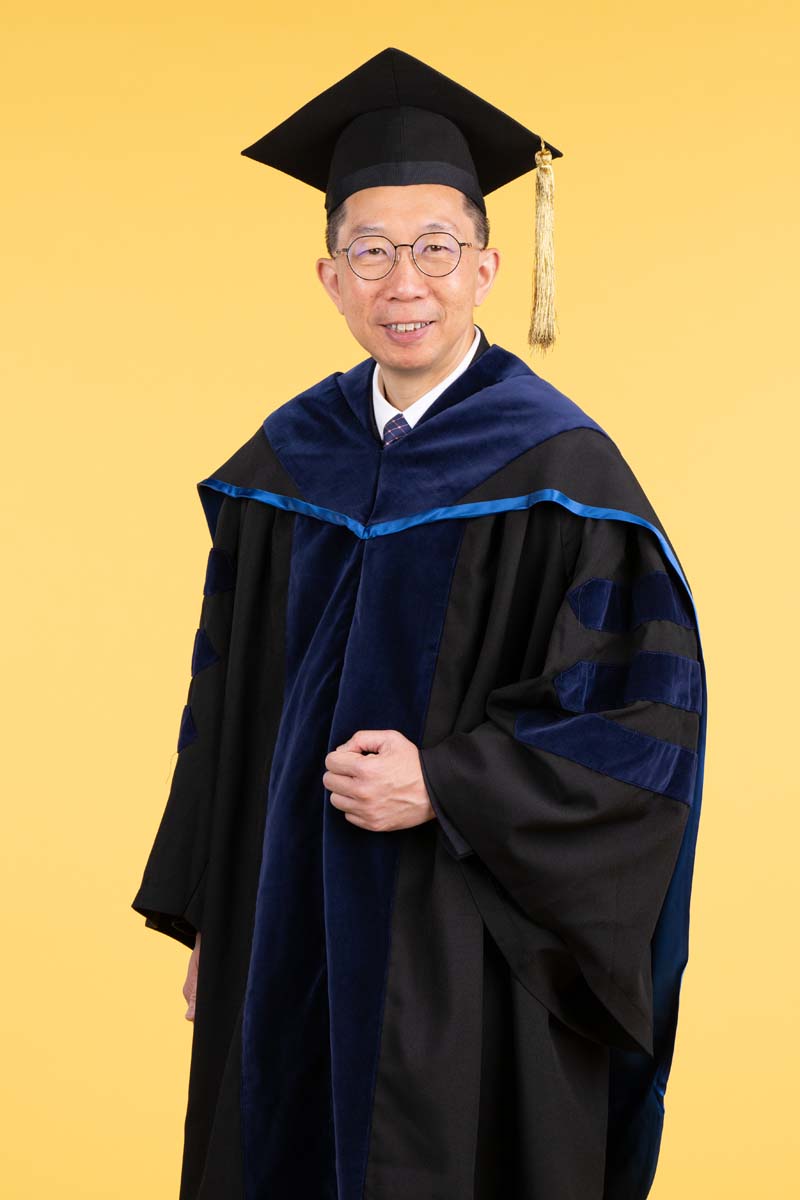
Professor Michael Ng Kwok Po
Dr. Elizabeth K.S. Law Endowed Professor in Data Science
In an era shaped by the exponential growth of artificial intelligence (AI) and big data, data science has emerged as a pivotal driver of technological progress. With the vast volume of data generated each day, the challenges of effectively storing, analysing, and processing this information have become high on the pressing research agenda. Professor Michael Ng Kwok Po, Dean of Science at Hong Kong Baptist University (HKBU) and the Dr. Elizabeth K.S. Law Endowed Professor in Data Science, notes, “Data science is found everywhere in our daily lives, playing a critical role in everything from mobile applications to scientific and engineering domains.” In this interview, Professor Ng will guide us through the world of data science, explaining its value and applications in biomedicine, neuroscience, environment monitoring, and everyday life.
Advancing biomedical research through brain disorder analysis
Data science is an interdisciplinary field that integrates applied mathematics, statistics, machine learning and computer science. Its applications are extensive and profound, spanning image processing, bioinformatics, health care, remote sensing, e-commerce, finance, and much more. As one of the strategic clusters in HKBU’s Institutional Strategic Plan 2018-2028, data analytics and AI remain a key focus for Professor Ng and his team. In recent years, they have actively explored related technologies to drive their development and real-world application.
One of their major research areas involves applying image processing techniques to analyse cellular imagery. “The data we collect are often low-quality, noisy and incomplete,” Professor Ng explains. “A core task of data science is to remove noise from images through modelling and to reconstruct missing information based on biological mechanisms. These processed, high-quality images enable biologists to observe cellular structures with greater granularity, track the transport processes of different cellular components, and thus identify the underlying causes of functional abnormalities and diseases.”
This approach is also used to enhance analysis of brain data. By processing magnetic resonance imaging (MRI) scans, the research team can synthesise high-quality images for more accurate identification of abnormal regions in the brain, particularly those associated with Alzheimer’s disease. This not only facilitates early diagnosis but also deepens our understanding of how such conditions affect brain function, thereby providing a robust foundation for neuroscience and preventive medicine.

Decoding complex data to uncover latent insights
The principle behind these applications lies in a core technique of data science: data modelling. This process transforms raw data into meaningful structures that underpin subsequent analysis, prediction and decision-making. Professor Ng points out that brain and biochemical imaging data often exhibit high-dimensional or even multidimensional structural complexity, for which traditional matrix-based methods have proven to be inadequate.
“To analyse these complex datasets, we adopt multi-dimensional modelling and employ high-order singular value decomposition (HOSVD) to uncover hidden patterns and structures within the images.” By leveraging these advanced methods, researchers can identify latent information in imaging data, accelerating progress made in disease analysis and molecular mechanism studies while driving innovative breakthroughs across the biomedical sciences.

Harnessing remote sensing for environmental research
Data science is not only transforming medicine, it also shines in the fields of geoscience and environmental studies. Scientists often employ satellites or aircraft for remote sensing to collect data on the Earth’s surface, atmosphere, marine environments and human activities. As with biomedical imaging, sensors may produce noise while collecting data, leading to image distortion. This is where data science comes in. “Data science can enhance the quality of satellite imagery, revealing ground-level details and weather changes with greater clarity,” Professor Ng states. “This bolsters research into climate patterns and environmental changes.”
Clearly, these technologies not only contribute to fundamental scientific research but also find broad application in disaster prediction, environmental monitoring, and urban planning, highlighting the cross-disciplinary value and multifaceted benefits of data science.
Data science in everyday life
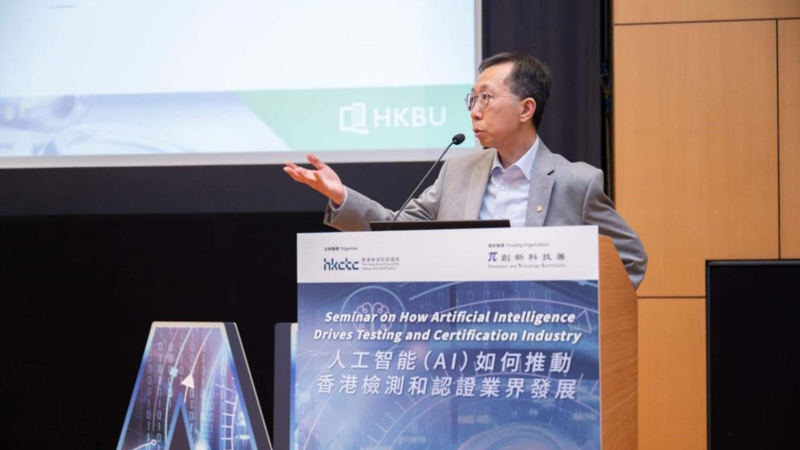
While data science may seem a distant discipline, it has quietly woven itself into our daily lives. For example, the search engines we use every day rely on big data analytics and algorithms to interpret user behaviour and needs, delivering personalised search results and content recommendations – all grounded in sophisticated mathematical theories.
In recent years, Professor Ng has spearheaded efforts to apply graph-theoretic approaches to data analysis, developing recommendation systems for digital platforms. These systems can accurately capture user behaviour patterns and preferences, offering tailored product suggestions that not only improve user experience but also boost platform performance and commercial value.
Exploring storage technologies to tackle data deluge
In today’s information explosion, data volumes continue to surge. Storing, managing, and maintaining this ever-expanding deluge within limited storage capacity poses a common challenge for data scientists and industry professionals alike. Encoding technologies now play a pivotal role in addressing this issue. By converting data into specific formats, effective encoding not only compresses redundant information to conserve storage space but also incorporates error correction and encryption capabilities, ensuring data integrity, security, and readability throughout storage and transmission.
As Professor Ng notes, “Data are being generated everywhere, all the time. To manage such immense volumes effectively, developing innovative and efficient storage technologies is an urgent priority.” This highlights that breakthroughs in storage technologies represent a vital frontier for future data science research.
Mathematics as foundation: forging ahead in applied mathematics
After earning his Ph.D. in Mathematics in the 1990s, Professor Ng embarked on an application-oriented career as research fellow at the Computer Science Laboratory of the Australian National University. Building upon his strong mathematical foundation, he adeptly applied theoretical knowledge to research in computational mathematics, AI, machine learning, data science and scientific computing, establishing profound interdisciplinary expertise. “I have always sought to bring mathematics into everyday life to tackle real-world problems,” he says. “That is why I am particularly drawn to research topics with substantial application potential. As data become increasingly prevalent across all sectors, they have also become central to my academic research.”
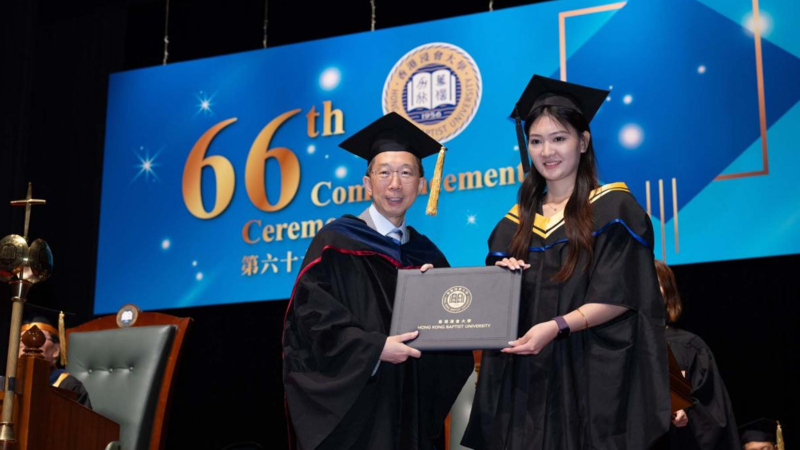
Professor Ng joined the Department of Mathematics at HKBU in 2005, where he served as Head of the Department and later as Chair Professor in both Mathematics and Computer Science. After a brief period away, he returned in 2023 to become Dean of the Faculty of Science. His academic achievements and contributions have earned him widespread acclaim. In 2017, Professor Ng was awarded the 12th Feng Kang Prize of Scientific Computing from the Chinese Academy of Sciences and was elected as a Fellow of the Society for Industrial and Applied Mathematics (SIAM). He is among the World’s Top 2% Scientists by Stanford University from 2017 to 2025.
In 2025, Professor Ng was named a Fellow of the American Mathematical Society and ranked as being among the world’s top 100 scientists in Mathematics by Research.com, which also awarded him the Computer Science and Mathematics in China Leader Award. That same year, he was recognised by Clarivate as a Highly Cited Researcher in the Mathematics category. In addition, his project “Theoretical Methods for Conceptual Representation and Interpretation of High-Dimensional Data” received the Second-Class Natural Science Award under the Beijing Science and Technology Awards. These distinguished honours underscore his influence in the fields of mathematics and computer science.
New transdisciplinary landscape for AI-era teaching and research
Professor Ng has long emphasised the need for the practical application of research and its interdisciplinary development. More than a decade ago, he pioneered bioinformatics within the Department of Mathematics at HKBU, leading a research team focused on the theoretical foundations and real-world applications of biostatistics. These efforts laid a solid groundwork for cross-disciplinary research. Since assuming the deanship of the Faculty of Science, he has continued to leverage his interdisciplinary expertise to broaden academic horizons and hands-on opportunities for students and researchers.
Throughout three decades of research and teaching, Professor Ng has witnessed the meteoric rise of AI, mathematics, data science, and scientific computing at HKBU and across academia, along with their profound impact on the world. Confronting the disruptions and opportunities brought about by AI’s ascent, he views it as a catalyst for dismantling disciplinary barriers and fostering the crossflow of knowledge. “We are exploring how AI can help talents transition from one domain to another,” he says. “This is a crucial aspect of transdisciplinary education, in which AI is not merely a tool but a bridge that facilitates skill transfer and the acquisition of new knowledge.”
Data science as force for societal good
In an age marked by rapid technological advancement and an ever-changing information landscape, social progress is inextricably tied to scientific and technological momentum, and true innovation arises from collaboration across disciplines. Professor Ng expresses his deep gratitude to Dr. Elizabeth K.S. Law for endowing him with the Professorship in Data Science, which has provided invaluable support for data science research at HKBU. Looking ahead, he will utilise this funding to invite scholars to HKBU from around the world, fostering in-depth exchanges and collaborations in diverse data science topics, sparking innovative ideas, and accelerating groundbreaking research outcomes.
Data are no longer just numbers; they are the key to resolving industrial pain points and creating real value. As Professor Ng concludes, “Through collaboration with other disciplines, we aim to empower data science research to address the complex societal challenges of our time.”
*This interview was published in March 2026.
Professor Michael Ng Kwok Po
- Dean of Science, HKBU (2023-present)
- Chair Professor in Mathematics; Chair Professor in Data Science; Chair Professor (Affiliate) of Department of Computer Science, HKBU (2023-present)
- Dr. Elizabeth K.S. Law Endowed Professor in Data Science, HKBU (2024-present)
- Fellow, American Mathematical Society (2025)
- Among Top 100 scientists in Mathematics worldwide; Computer Science and Mathematics in China Leader Award, Research.com (2025)
- Highly Cited Researcher (Mathematics), Clarivate (2025)
- First Prize in the 2025 Computer Academy of Guangdong Excellent Paper Award for the co-authored paper “Simplicial Complex Neural Networks” (2025)
- Second-Class Natural Science Award, Beijing Science and Technology Awards (2025)
- Among World's Top 2% Scientists, Stanford University (2024, 2025)
- Fellow, Asia-Pacific Artificial Intelligence Association(2022)
- Chair Professor, Department of Mathematics, HKU (2019-2023)
- Chairperson, HKU-TCL Joint Research Center for AI (2020-2023)
- Director, Research Division for Mathematical and Statistical Science, HKU (2019-2021)
- Director, Big Data Research Cluster, HKU (2019-2020)
- Second-Class Prize, Guangdong Natural Science Award (2021)
- Second-Class Prize, Hunan Natural Science Award (2020)
- Fellow, Society for Industrial and Applied Mathematics (2017)
- 12th Feng Kang Prize of Scientific Computing, Chinese Academy of Sciences (2017)
- Outstanding Performance in Scholarly Work, HKBU (2014)
- Head, Department of Mathematics, HKBU (2014-2019)
- Director, Centre for Mathematical Imaging and Vision, HKBU (2006-2019)
- Chair Professor in Mathematics and Computer Science, HKBU (2015-2019)
- Professor, Department of Mathematics, HKBU (2005-2015)
- Secretary, East Asia Section of Society for Industrial and Applied Mathematics (2005-2009)
- Secretary, Hong Kong Mathematical Society (1998-2006)